Previous
Previous Product Image

HITZ 2G DISPOSABLE ZUES EDITION ALL IN ONE

Price range: $24.00 through $1,350.00
Next

ARCADIA FUSION V2 2G DISPOSABLE DUAL FLAVORS

Price range: $30.00 through $1,250.00
arcadia fusion v2 2g disposable, arcadia fusion 2g, arcadia fusion 2g vape, arcadia fusion 2g disposables, arcadia fusion 2g vapes, arcadia fusion 2g cart, arcadia fusion 2g dispo, arcadia fusion 2g dispos, arcadia fusion v2, arcadia fusion v2 2g vape, arcadia fusion v2 disposable, arcadia fusion dual flavors, arcadia fusion dual disposable

WHOLE MELTS EXTRACTS 2G DISPOSABLE PHASE FIVE DUAL CHAMBER

Price range: $30.00 through $1,500.00

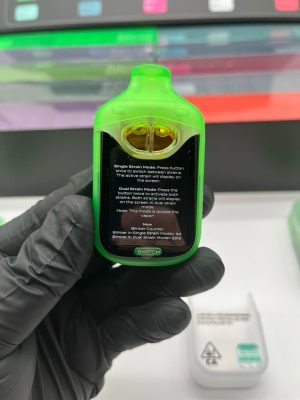
Dual-chamber vape device technology represents a significant evolution in modern vaporization systems. Unlike conventional single-reservoir designs, these devices incorporate two separate chambers within a single unit. As a result, they offer enhanced flexibility, improved functionality, and greater user control. Because of this innovation, dual-chamber systems continue to gain attention in both consumer and technical discussions.

Add to Wishlist
Add to Wishlist

Description

Dual-Chamber Vape Device Technology – Advanced Design, Functionality, and Performance Explained

Introduction to Dual-Chamber Vape Device Technology 

Dual-chamber vape device technology represents a significant evolution in modern vaporization systems. Unlike conventional single-reservoir designs, these devices incorporate two separate chambers within a single unit. As a result, they offer enhanced flexibility, improved functionality, and greater user control. Because of this innovation, dual-chamber systems continue to gain attention in both consumer and technical discussions whole melts 2g phase five.

At a fundamental level, a dual-chamber device is engineered to store and vaporize two distinct liquid formulations independently. Each chamber operates as a self-contained unit, complete with its own heating element and airflow pathway. Therefore, the contents remain isolated until activation occurs. This separation is critical because it preserves the integrity of each formulation while preventing unintended mixing. Consequently, performance remains consistent across repeated use.

Moreover, the ability to manage two chambers within a single device introduces a new dimension of versatility. Users can switch between chambers depending on preference or requirement. In addition, some systems allow both chambers to be activated simultaneously. As a result, combined output can be achieved, creating a blended vapor stream. Because of this capability, dual-chamber devices provide a level of customization that traditional systems cannot match.

From an engineering perspective, the design of these devices requires careful integration of multiple subsystems. Each chamber must be precisely aligned with its corresponding heating mechanism. Furthermore, airflow must be regulated to ensure efficient vapor delivery. Therefore, internal architecture is often optimized to balance performance and reliability. As a result, modern dual-chamber devices demonstrate a high level of mechanical refinement.

Another important aspect of this technology is its impact on usability. By incorporating two reservoirs, the need for frequent replacement or reloading is reduced. Consequently, operational efficiency is improved. In addition, switching between chambers can often be performed with minimal effort. This is typically achieved through a selector mechanism, which may be mechanical or electronic. Therefore, the overall user experience becomes more streamlined and intuitive.

In terms of performance, dual-chamber systems are designed to deliver consistent output. Each chamber is activated independently, and the heating process is carefully controlled. As a result, vapor production remains stable across different usage scenarios. Furthermore, when both chambers are engaged, synchronization becomes essential. Because of this, advanced designs ensure that airflow and heat distribution are balanced. Consequently, the combined output is uniform and predictable.

Thermal management also plays a crucial role in these devices. Since two heating elements may operate within a confined space, heat must be managed effectively. Therefore, materials with appropriate thermal properties are used to maintain safe operating conditions. In addition, internal insulation may be incorporated to prevent heat transfer between chambers. As a result, each reservoir can function independently without interference.

Another defining characteristic of dual-chamber technology is its adaptability. These devices can accommodate different formulations, allowing for varied applications. Because of this flexibility, they are often selected in scenarios where multiple options are required within a single platform. Furthermore, the ability to switch or blend outputs enhances their practical value. Consequently, they serve as a versatile solution in evolving vaporization systems.

Durability is also considered during the design process. Components are typically manufactured to withstand repeated heating cycles. In addition, sealing mechanisms are implemented to prevent leakage and maintain internal pressure. Therefore, reliability is maintained over time. Because of these design considerations, dual-chamber devices can deliver consistent performance even under extended use.

From a structural standpoint, the integration of two chambers requires efficient use of space. Designers must ensure that the device remains compact while accommodating additional components. As a result, internal layouts are often optimized to maximize efficiency. Furthermore, external form factors are refined to maintain portability. Consequently, users benefit from advanced functionality without sacrificing convenience.

In conclusion, dual-chamber vape device technology introduces a sophisticated approach to vaporization. By combining independent reservoirs, controlled heating systems, and flexible output options, these devices expand the capabilities of traditional designs. Moreover, their engineering reflects a balance between complexity and usability. As a result, they continue to represent an important development in the evolution of vaporization systems.

Core Components and Functional Architecture of Dual-Chamber Vape Devices

Dual-chamber vape devices rely on a coordinated system of internal components that work together to deliver controlled and consistent vaporization. While the concept may appear straightforward, the underlying architecture has been carefully engineered to support dual functionality without compromising performance. Therefore, understanding these components provides insight into how efficiency and reliability are achieved wholemelts extracts.

To begin with, the most critical elements are the dual reservoir chambers. Each chamber is designed to hold a separate liquid formulation, and importantly, both are sealed independently. Because of this separation, cross-contamination is prevented, and each formulation retains its original properties. In most designs, the chambers are positioned either side-by-side or stacked vertically. As a result, space is utilized efficiently while maintaining structural balance.

Connected to each reservoir is an independent heating element, often referred to as a coil or ceramic core. These heating elements are responsible for converting liquid into vapor. When activated, heat is applied directly to the formulation, and vapor is produced almost instantly. Because each chamber has its own heating system, they can operate individually or simultaneously. Consequently whole melts extracts 2g disposable, this allows both switching and blending functionality within a single device.

In addition, the airflow system plays a central role in vapor delivery. Air is drawn through intake channels, passes over the heating element, and carries the vapor toward the mouthpiece. In dual-chamber devices, airflow must be carefully regulated to ensure balance. When only one chamber is active, airflow is directed accordingly. However, when both chambers are engaged, airflow is split and then recombined. Therefore, internal channel design becomes essential for maintaining uniform output.

Another key component is the selector mechanism, which determines how the chambers are activated. This mechanism may take several forms, including a physical switch, rotating dial, or electronic control interface. Because of this system, users can easily toggle between chambers or activate both at once. In more advanced devices, the selection process is supported by internal circuitry. As a result, transitions between modes are smooth and precise whole melts 2g disposables.

The battery unit provides the energy required to power the heating elements and control systems. Since dual-chamber devices may activate two heating elements simultaneously, power demand can be higher than in single-chamber systems. Therefore, battery capacity and discharge efficiency must be carefully considered during design. In many cases, rechargeable lithium-ion batteries are used because they provide stable output. Consequently, consistent performance is maintained throughout the device’s operational cycle.

Equally important is the control circuitry, which regulates power distribution and system behavior. This circuitry ensures that each heating element receives the appropriate level of energy. In addition, it may include safety features such as overheat protection and short-circuit prevention. Because of these safeguards, the device operates within safe parameters. Furthermore, performance consistency is enhanced through controlled energy delivery.

The mouthpiece assembly serves as the final stage in the vapor pathway. It is designed to deliver vapor efficiently while maintaining comfort during use. In dual-chamber systems, the mouthpiece must accommodate combined airflow when both chambers are active whole melts 2g vape. Therefore, its internal design is often optimized to reduce resistance and maintain smooth inhalation. As a result, the user experiences consistent vapor flow regardless of the selected mode.

Sealing systems also represent a crucial part of the device architecture whole melt 2g carts. Each chamber must be properly sealed to prevent leakage and maintain internal pressure whole melts 2g disposable. Because dual-chamber devices contain more connection points, sealing mechanisms must be particularly reliable. High-quality materials are typically used to ensure durability. Consequently, long-term integrity is preserved even with repeated use whole melts 2g phase five.

Thermal insulation is another important consideration. Since two heating elements may operate in close proximity, heat transfer must be controlled wholemelts. Therefore whole melts 2g phase five, insulating materials are incorporated between chambers. This prevents unwanted heat interaction and ensures that each chamber functions independently whole melts 2g phase five. As a result, performance stability is maintained even during simultaneous activation whole melts 2g phase five.

Furthermore, structural housing integrates all components into a single, compact unit. The housing must provide both protection and ergonomic support. Because of this, materials are selected for strength, heat resistance, and lightweight properties. In addition, the external design often reflects functional considerations such as grip and portability. Consequently, the device remains practical for everyday use whole melts 2g phase five.

Finally whole melts extracts 2g disposables, indicator systems are often included to provide user feedback. These may consist of LED lights or display elements that show battery status or active chamber selection. Because of this feature, users can monitor device operation easily. As a result, usability is enhanced without requiring complex interaction.

In conclusion, the core components and functional architecture of dual-chamber vape devices demonstrate a high level of engineering integration whole melts extracts 2g. Each subsystem from reservoirs and heating elements to airflow and control circuitry—works in coordination to deliver reliable performance wholemelt extract. Moreover, careful attention to sealing, insulation, and power management ensures long term functionality whole melts 2g phase five. Therefore, these devices represent a sophisticated approach to modern vaporization technology whole melts 2g phase five.

Switching Modes, Blending Capabilities, and User Control Systems 

One of the most defining characteristics of dual-chamber vape device technology lies in its ability to offer multiple operational modes. Unlike single reservoir systems, these devices are designed to provide switching and blending capabilities within a single platform whole melts 2g phase five. As a result, users gain a higher level of control over output behavior. Because of this flexibility, dual-chamber systems continue to stand out in modern vaporization design whole melts 2g phase five.

To begin with, switching mode represents the most fundamental function. In this configuration wholemelt 2g carts, only one chamber is activated at a time whole melts 2g phase five. When a user selects a specific chamber, the corresponding heating element engages whole melts 2g phase five, while the other remains inactive whole melts 2g phase five. Therefore, each formulation can be used independently without interference whole melts 2g phase five. This approach is particularly useful when distinct outputs are required at different times whole melts 2g phase five. Consequently, users can alternate between chambers without needing multiple devices whole melts 2g phase five.

In addition, switching between chambers is typically designed to be seamless whole melts 2g phase five. A selector mechanism—either mechanical or electronic—is used to control activation. For example, a toggle switch may be integrated into the device body. Alternatively, a button interface or rotational dial can be used. Because of these options, the transition between chambers is completed quickly and efficiently. As a result, usability is significantly improved whole melts 2g phase five.

Beyond switching, blending mode introduces a more advanced capability. In this mode, both chambers are activated simultaneously whole melts 2g phase five. When this occurs whole melts 2g phase five, each heating element produces vapor independently. The outputs are then combined within the airflow system before reaching the mouthpiece whole melts 2g phase five. Therefore, a mixed vapor stream is created whole melts 2g phase five. This functionality allows for dynamic output combinations, which cannot be achieved in single-chamber devices.

Reviews

There are no reviews yet.

Be the first to review “WHOLE MELTS EXTRACTS 2G DISPOSABLE PHASE FIVE DUAL CHAMBER”

Your email address will not be published. Required fields are marked *

Shopping cart

0
image/svg+xml

No products in the cart.

Continue Shopping
error: Content is protected !!